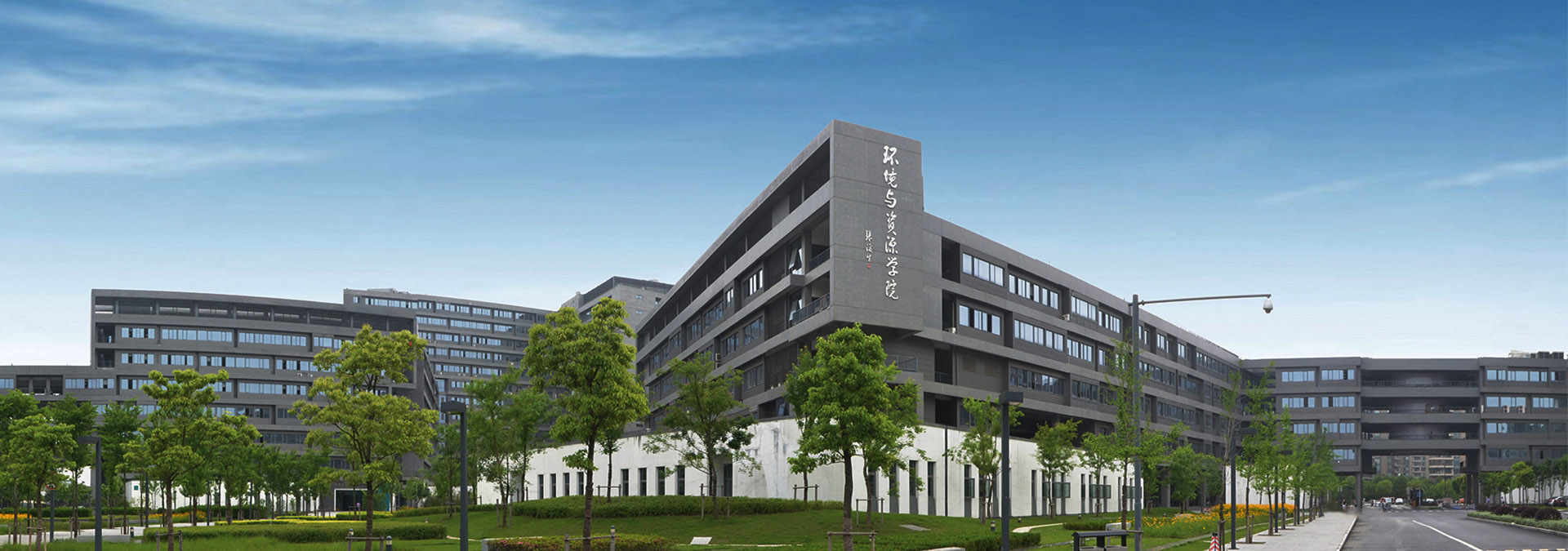
College of Environmental and Resource Sciences
2019-08-12
The College of Environmental and Resource Sciences (CERS) at Zhejiang University was established in July 1999 through the merger of relevant departments, institutes, laboratories, and centers of the former Zhejiang University, Hangzhou University, and Zhejiang Agricultural University. The College currently comprises three departments, eight research institutes, and one national experimental teaching center, with approximately 25,000 m² of floor space dedicated to teaching and research.
CERS has 125 faculty and staff members, including 94 full-time academic faculty. Among them are 46 professors, one tenured professor, two research fellows, two senior experimentalists, 19 associate professors, five associate research fellows, and seven tenured associate professors, together with 18 researchers under the “Hundred Talents Program” and three specially appointed (associate) researchers. The College has 78 doctoral supervisors and 92 master’s supervisors. At present, the College hosts one academician of the Chinese Academy of Engineering, 12 nationally recognized high-level talents, and 28 national young talents. CERS is home to 115 postdoctoral researchers (including 62 discipline-based postdocs), 1,016 graduate students (405 doctoral students and 611 master’s students), and 309 undergraduate students.
CERS has two first-level disciplines: Environmental Science and Engineering (selected into the national Double First-Class initiative, rated A) and Agricultural Resources and Environment (a national key discipline, rated A+). The discipline of Environment/Ecology ranks within the global top 1‰ in ESI. The College hosts two postdoctoral research stations (Environmental Science and Engineering; Agricultural Resources and Environment); two first-level doctoral programs; six master’s programs (Environmental Science, Environmental Engineering, Soil Science, Plant Nutrition, Agricultural Remote Sensing and Information Technology, Water Resources Utilization and Protection); and two professional doctoral programs (Resources and Environment; Agriculture). CERS also offers three undergraduate majors: Environmental Science, Environmental Engineering, and Agricultural Resources and Environment (with Resource and Environmental Science merged into it since 2019). All three are designated as national first-class undergraduate programs, and the Environmental Engineering program has passed professional engineering accreditation.
CERS houses a comprehensive set of advanced research platforms, including the National Key Laboratory of Soil Pollution Prevention and Control, the National Engineering Research Center for Soil Nutrient Management and Pollution Remediation, the Key Laboratory of Pollution Remediation and Ecological Health of the Ministry of Education, the Key Laboratory of Watershed Non-Point Source Pollution Control and Water Ecological Health of the Ministry of Water Resources, the Provincial Key Laboratory of Organic Pollutant Processes and Control, the Provincial Key Laboratory of Water Pollution Control and Water Ecological Health, the Provincial Key Laboratory of Agricultural Remote Sensing and Information Technology, the Provincial Key Laboratory of Agricultural Resources and Environment, the Zhejiang Engineering Research Center for Water Pollution Control, the Zhejiang Engineering Research Center for Integrated Soil Pollution Prevention and Control, and the Zhejiang International Science and Technology Cooperation Base for Environmental Pollution and Ecological Health.
The College is home to two National Natural Science Foundation of China (NSFC) Creative Research Groups, one Ministry of Education Innovative Team, two Ministry of Agriculture Innovation Teams, and two Zhejiang Provincial Leading Science and Technology Innovation Teams, including teams in Environmental Interface Behavior and Regulation Principles of Organic Pollutants, Soil Pollution Processes and Remediation Principles, Pollution Remediation and Ecosystem Health, Agro-Environmental Quality and Food Safety, Soil Pollution Mitigation and Control, Functional Materials for Water Treatment and Applications, and Pollution Control Technologies for Flue Gas from Coal-Fired Industrial Boilers and Kilns.